MarsBLogv3.2
Written on November 24, 2025 November 24th, 2025 by RashardKelly @nasa-jpl
by RashardKelly @nasa-jpl
tags: mars - dsn - "Deep - Space - Network" - roboticss 24 November 2025CARL SAGAN MARS THE SEARCH BEGINS NASA MARINER & VIKING MISSIONS 48614 WATCH @nasa-pds @blackgirlscode @cityoflosangeles Famed astronomer and Cornell University scientist Carl Sagan takes the viewer to the Red Planet in this circa 1972 official NASA film, “Mars: The Search Begins.” Sagan explains that not much was known about our neighbor in space until the unmanned Mariner 9 space probe, which was launched toward Mars in 1971. At mark 00:55, geologist and astronomer Harold Masursky explains how scientists were working to understand how the planet was formed, while biologist Gerald Soffen explains the importance of the search for life on Mars (mark 01:27). Beginning at mark 01:53, we see several images taken by Mariner 9 while we’re told of the significance of the scenes, including massive dust storms and volcanoes. At mark 04:20 we learn of the temperature variations that range from -150 degrees at night to 70 degrees on the equator. As the film continues we learn of how scientists were using images to carefully map the surface, as well as it’s two moons — Phobos and Deimos. Mark 06:15 shows artist renditions of what the surface of Mars may look like, with red sands giving way to blue sky and wispy white clouds. Sagan returns at mark 07:00 to discuss changes observed on the Martian surface that they concluded were the result of high winds uncovering material underneath, while images sustain his claims. He also discusses 3,000 mile long rifts on the Martian surface (mark 10:15) and possible volcanic activity at Olympus Mons (mark 12:30). Mariner 9 images also contained a few surprises, Sagan explains starting at mark 15:30, including hundreds channels that they believed may have been cut by running water — even though no evidence of water had been found. At mark 19:30, Soffen returns to ponder “what is life” and does life in any form exist on Mars. At mark 21:55, the film looks toward the future the planned 1976 Viking mission, which safely landed a pair of spacecraft on the planet. (Soffen explained, starting at mark 22:05, that a major goal of Viking was to search for life). The film’s narrator (actor Vic Perrin) concludes at mark 27:25 that the mission may answer one of science’s greatest questions: “Has life developed only on Earth? Or is there life elsewhere?”
Mariner 9 (Mariner Mars ‘71 / Mariner-I) was an unmanned NASA space probe that contributed greatly to the exploration of Mars and was part of the Mariner program. Mariner 9 was launched toward Mars on May 30, 1971 from Cape Canaveral Air Force Station and reached the planet on November 14 of the same year, becoming the first spacecraft to orbit another planet – only narrowly beating the Soviets’ Mars 2 and Mars 3, which both arrived within a month. After months of dust storms it managed to send back clear pictures of the surface. Mariner 9 returned 7329 images over the course of its mission, which concluded in October 1972. Mariner 9 remains a derelict satellite in Mars orbit. It is expected to remain in orbit until approximately 2022, when the spacecraft is projected to enter the Martian atmosphere and either burn up or crash into the planet’s surface.
We encourage viewers to add comments and, especially, to provide additional information about our videos by adding a comment! See something interesting? Tell people what it is and what they can see by writing something for example: “01:00:12:00 – President Roosevelt is seen meeting with Winston Churchill at the Quebec Conference.”
This film is part of the Periscope Film LLC archive, one of the largest historic military, transportation, and aviation stock footage collections in the USA. Entirely film backed, this material is available for licensing in 24p HD, 2k and 4k. For more information visit http://www.PeriscopeFilm.com
hi @nasa-jpl @nasa-develp @nasa @whitehouse its a checking @blackgirlscode

Mars Reconnaissance Orbiter : Mission Objectives NASA’s Mars Reconnaissance Orbiter searches for evidence that water persisted on the surface of Mars for a long period of time. ReadMore
New Glenn Mission NG-2 Webcast -https://www.blueorigin.com/missions/ng-2
Mars Reconnaissance Orbiter (MRO)
Project pdf @BlackgirlsCode i wanna beg @normani on @github to never reply @nasa-pds —
EXCERPTFROM : MRO 31-468 @nasa-jpl @TheSpaceDevs @BlueOrigin
Assuming that the MRO Primary Science Mission extends for 2 Earth years and is supported by
two nominally 8 hour X Band 34 m DSN passes per day and three 70m passes per week, the
spacecraft is capable of returning a total of up to 34 terabits (Tbits) of data, transmitting at rates
which vary throughout the mission from 20 to 100 and back to 20 gigabits (Gbits) of data per
day. The lowest data rates occur at the start of the Primary Science Mission when the EarthMars range is greatest, and the highest data rates occur when the range is small, a period
extending from late October 2007 to June 2008. Table 2 shows telemetry data volumes allocated
to each instrument, based on full mission success criteria of 26 Tb data downlinked for all
instruments combined. It is expected that 34.5 Tb as opposed to 26 Tb of data will be
downlinked. Additional data may be transmitted using X Band 70 m DSN coverage, particularly
early in the mission when data rates are otherwise low. MRO also carries a Ka Band
demonstration package, which can be used on additional DSN passes to augment the nominal
science data return. Additional data would also be acquired during any extended missions. Table
3 shows estimated science product volumes for several data return cases.
The generation of EDRs and RDRs from telemetry data typically results in a data volume
expansion of at least an order of magnitude. Thus, archiving MRO data will be challenging
indeed since at least several hundred terabits of data will be produ

JPL Open Source Rover Project
Mars Reconnaissance Orbiter (MRO)
Project pdf @BlackgirlsCode i wanna beg @normani on @github to never reply @nasa-pds —
EXCERPTFROM : MRO 31-468 @nasa-jpl @TheSpaceDevs @BlueOrigin
Assuming that the MRO Primary Science Mission extends for 2 Earth years and is supported by
two nominally 8 hour X Band 34 m DSN passes per day and three 70m passes per week, the
spacecraft is capable of returning a total of up to 34 terabits (Tbits) of data, transmitting at rates
which vary throughout the mission from 20 to 100 and back to 20 gigabits (Gbits) of data per
day. The lowest data rates occur at the start of the Primary Science Mission when the EarthMars range is greatest, and the highest data rates occur when the range is small, a period
extending from late October 2007 to June 2008. Table 2 shows telemetry data volumes allocated
to each instrument, based on full mission success criteria of 26 Tb data downlinked for all
instruments combined. It is expected that 34.5 Tb as opposed to 26 Tb of data will be
downlinked. Additional data may be transmitted using X Band 70 m DSN coverage, particularly
early in the mission when data rates are otherwise low. MRO also carries a Ka Band
demonstration package, which can be used on additional DSN passes to augment the nominal
science data return. Additional data would also be acquired during any extended missions. Table
3 shows estimated science product volumes for several data return cases.
The generation of EDRs and RDRs from telemetry data typically results in a data volume
expansion of at least an order of magnitude. Thus, archiving MRO data will be challenging
indeed since at least several hundred terabits of data will be produ
Rashard[M_R_O/JPL/NASA] Mars Reconnaissance Orbiter (MRO) Project last updated at 2026-07-18 20:18
@blueorigin @blackgirlscode @nasa-pds @cityoflosangeles @LACMTA hi
California_Linux:
@usgs Index of VIP01.004:, BadgeNotes l8tr @blackgirlscode @brandynorwood @normani @

last updated at 2026-07-18 20:18 Experiance Insight
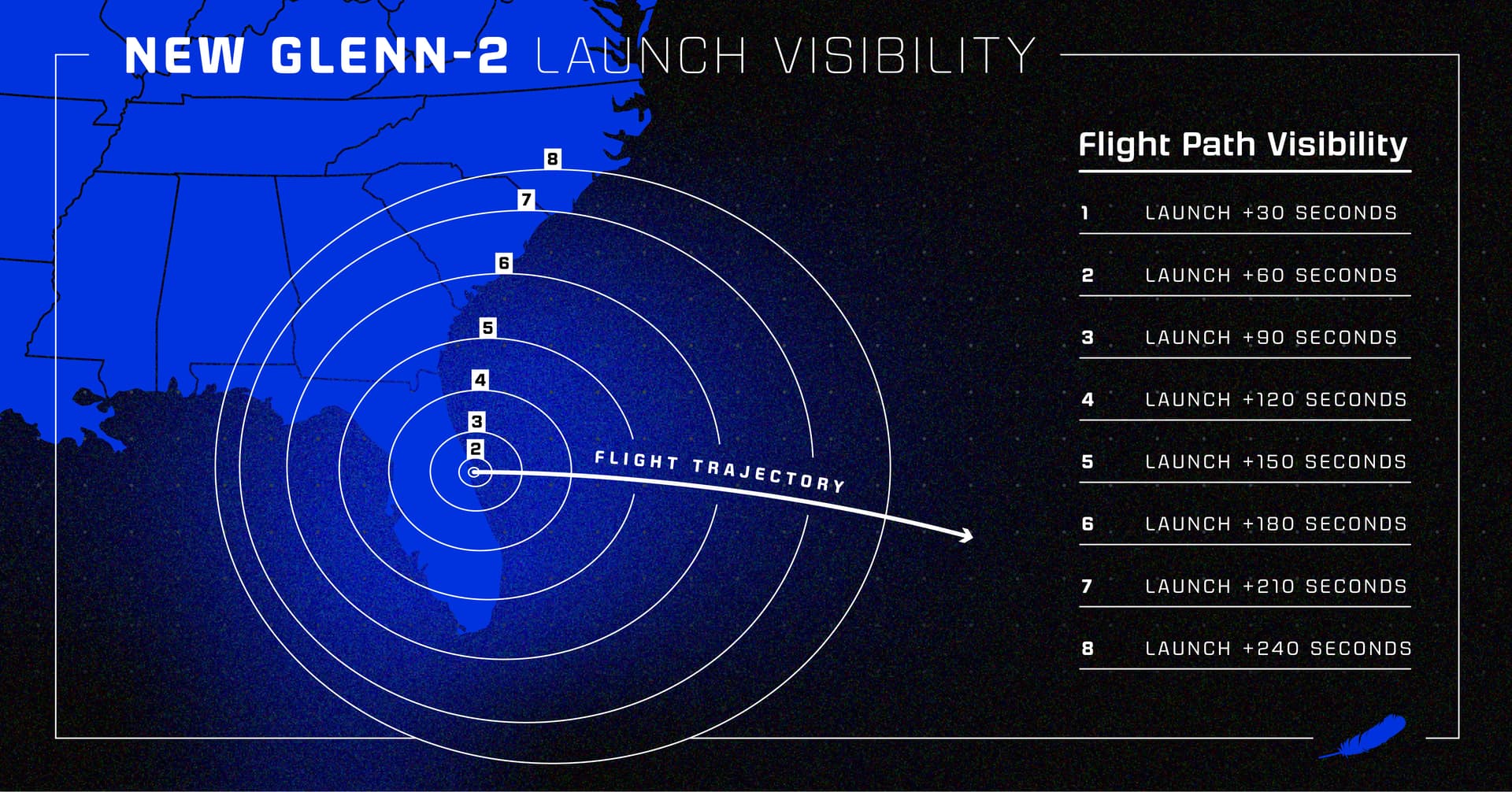
New Glenn's second mission will launch from Launch Complex 36 at Cape Canaveral Space Force Station and will send NASA’s ESCAPADE twin spacecraft to Mars. This launch will support ESCAPADE’s science objectives as the twin spacecraft progress on their journey to the Red Planet.
ORigin @ucberkeley
READMORE @ucberkeley @BlueOrigin

SolidSteel - DK 785 @blackgirlscode
The ESCAPADE mission will send two Rocket Lab spacecraft to orbit Mars and is the result of a powerful collaboration between Rocket Lab, @UCBSSL & @NASA.
— Rocket Lab (@RocketLab) November 10, 2025
Here are some of the incredible people who built this interplanetary dream 👇 pic.twitter.com/jOTkyesf7o
Jennifer Hudson
pdf re : Murder of Jason Hudson
[@BlackGirlsCode @Emit-Sds] the WikiTalkPages of every person in the spotlight need review and monitoring, take care of your household first @newshour @datadesk @blackgirlscode @meta ::: NASA Jet Propulsion Laboratory #ChinellGreen might be Jennifer Hudson on occasion and someone was gossiping #youtubeconspiracy in longbeach Natasha Duncan-Frederick Garrick Duckery The Jennifer Hudson Family Murders Normani is she #ChimellJohnson Mayor Karen Bassfrom #beachhighschool Alfred Ely Beach High School ? Immigration And Customs Enforcement (ICE ) some people will use this gossip as an excuse to violate her personal space Gavin Newsom Keisha Lance BottomsKimberly Bryant, Founder Black Girls CODE Fort Stewart Hunter Army Airfield The Jennifer Hudson Family Murders https://www.thoughtco.com/the-jennifer-hudson-family… THOUGHTco #Thoughtcom Wikipedia
Murder of #JasonHudson Chicago Fire Dept: Engine Co. No. 73 WTOC Dawn Baker WTOC Shea Schrader LAist https://en.wikipedia.org/wiki/Murder_of_Jason_Hudson ::::: #WikiTalk https://en.wikipedia.org/wiki/Talk:Murder_of_Jason_Hudson #Chicago Dreezy https://en.wikipedia.org/…/Category:C-Class_Chicago… Jennifer Hudson - Spotlight (Official Video)
Jupiter Orbit Insertion Press Kit Mission Overview
Space Station Freedom interior resources clickhere @TheSpaceDevs
MEN ENCOUNTER MARS (1965)
@CityOfLosAngeles @StateofCalifornia @nasa-pds @emit-sds WATCH youtu.be/r7D7ZNp8lIY?si=kw2PPV5FRiFzc4hF / Orbiter Spaceport @nasa-jpl @emit-sds / MEN ENCOUNTER MARS (1965) - Mariner 4, first Mars flyby & photos OR WATCH youtu.be/r7D7ZNp8lIY?si=kw2PPV5FRiFzc4hF
SEX TRAFFICKING IN ATLANTA GEORGIA❗️
@nasa-jpl @nasa @nasa-pds @cityoflosangeles @stanteofcalifornia @blackgirlscode I ALMOST GOT KIDNAPPED❗️(story time😱🤬)ROSE POCAHONTAS
Kool Moe Dee vs Busy Bee Starski Dec 1981 Harlem World
” THE ALPHABET CONSPIRACY “ 1959 BELL SCIENCE SERIES FILM / STUDY OF LINGUISTICS PART 1
Wild Style (1982)
wiki youtube.com/@CharlieAhearnNY
artcrimes.com moved to https://www.graffiti.org/
https://www.graffiti.org/

Colors <~ Watch on @youtube #FiCtiONDRAMAREALiTY plot;tourist hurting locals, im talking about freaknik not tourist! imdb A police veteran and his rookie partner fight Los Angeles gangs.
Related doc Graffiti_VeriteVOL1

Books
How to compete for NASA contracts @blackgirlscode Uplink-Downlink A History of the Deep Space Network 1957–1997 Deep Space Telecommunications Systems Engineering 1982 Read You Loud and Clear! The Story of NASA’s Spaceflight Tracking and Data Network Satellite Data Explorer
@nasa-pds @podaac @cityoflosangeles @stateofcalifornia
date: 2024-11-18 22:51:06 -0800
Trainiing repo @emit-sds @cityoflosangeles @newshour
RGB MApping NaturalColor @blackgirlscode nasa sport viewer
Books
How to compete for NASA contracts @blackgirlscode
Uplink-Downlink A History of the Deep Space Network 1957–1997
Books
How to compete for NASA contracts @blackgirlscode
Uplink-Downlink A History of the Deep Space Network 1957–1997
Deep Space Telecommunications Systems Engineering 1982
Read You Loud and Clear! The Story of NASA’s Spaceflight Tracking and Data Network
Rashard Kelly NasaJpl MRO JUNO iSS
DOWNLOAD_PDF
July 18, 2026 2025-11-24 00:00:00 +0000 pagedate November 24, 2025 This page was last updated at 2026-07-18 20:18.
Currently Compling g_e, m/s^2

Mars Exploration Program Analysis Group
(MEPAG) November 2025 Meeting Virtual - November 12, 2025 @nasa-pds @nasa-jpl Name Mr. Rashard Iman “Rashard” Kelly Company NASA: Jet Propulsion Laboratory LaCounty Country United States Telephone (818) 354-4321 Email holetoanotheruniverse40@gmail.com ADA Special Needs ucla put some thing in my ankle that feels like a magnet… i gotta study more idk the probability of doom… Civil Servant non-NASA U.S. Govt. employee Registration Type Professional Virtual Registration Amount b$0.00 Your badge will appear as:
Rashard
Kelly

NASA: Jet Propulsion Laboratory LaCounty [@nasa-jpl](https://archive.org/download/commitmentmaintenance/48584%20NASA%20Viking.mp4)
AnimalFarm 1954
Rashard Kelly NasaJpl MRO JUNO iSS



RiCOTHAKARASHARD = RAshardKElly[Thaka]
@nasa-develop @stateofcalifornia @cityoflosangeles @usgs @blackgirlscode
Mars Exploration Program Analysis Group (MEPAG) November 2025 Meeting
Virtual - November 12, 2025
CellularTestamonials
GloRilla - Internet Trolls Rico Nasty - @apple IPHONE BIA - FALLBACK _covidHospitalityIndustry_era Sonta “Your Mistake” WorldStar - CHiLDiSHGAMBiNO @nasa thats decatur for real and its a reality show market in @stateofcalifornia @cityoflosangles lacounty
@blackgirlscode @nasa-jpl




Currently Compling g_e, m/s^2




OBJECT = MISSION MISSION_NAME = “MARS GLOBAL SURVEYOR”
OBJECT = MISSION_INFORMATION MISSION_START_DATE = 1994-10-12 MISSION_STOP_DATE = UNK MISSION_ALIAS_NAME = “N/A” MISSION_DESC = “
Mission Overview
================

  The Mars Global Surveyor (MGS) spacecraft was launched from
  the Cape Canaveral Air Station in Florida on 7 November 1996
  aboard a Delta-2/7925 rocket.  The 1062-kilogram spacecraft,
  built by Lockheed Martin Astronautics, traveled nearly 750
  million kilometers over the course of a 300-day cruise to
  reach Mars on 12 September 1997 [[JPLD-12088](https://pds-geosciences.wustl.edu/missions/mgs/catalog/mission.txt)].
mission.cat @nasa-jpl @cityoflosangeles @stateofcalifornia @blackgirlscode @whitehouse civilian thingverse.com/thing:408065 [JPLD-12088]. https://pds-smallbodies.astro.umd.edu/holdings/ro-cal-cosima-3-v2.0/catalog/ref.cat
layout: default title: HoleToAnotherUniVersE